Introduction
You receive two quotations for an Integrated Tow Truck. Both have the same tonnage, both run on the same brand of chassis and the price difference gets your attention.
Hint: That price difference is where most of the attention should be going.
It will be rare that the gap appears in headline specifications. They hide in the valves. They are in the steel. In the winch rope and how the frame was formed. The sort of thing that doesn’t get shown in brochure photos. But that’s exactly why it matters before you make a buying decision.
Here’s what sets apart the recovery truck that you still use in year ten from the one quietly leaking hydraulic oil in year two.
Inside Integrated Tow Truck: 7 Components That Decide Quality
Underlift System: Lifting Capacity vs Towing Capacity
Guess what sells trucks: towing capacity. Guess which figure is misread most by buyers: towing capacity.
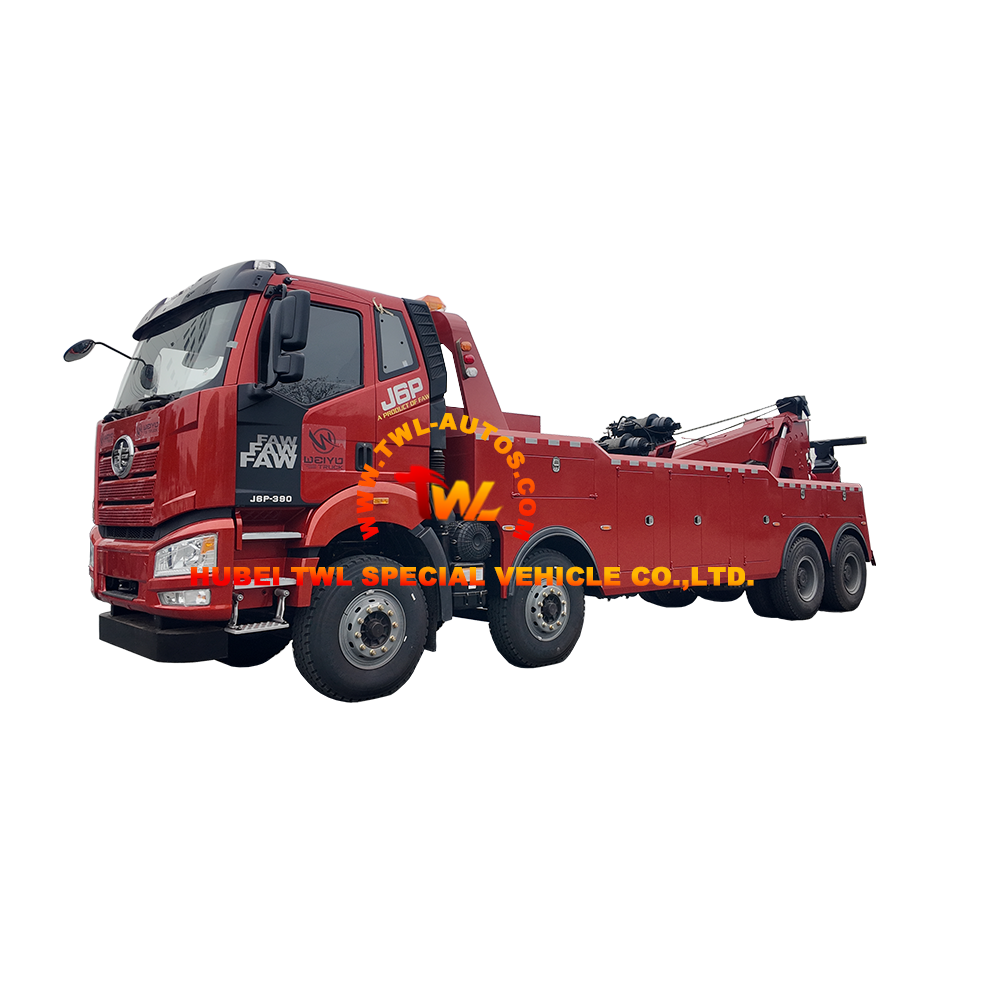
The TWL FAW J6P 8X4 Integrated Wrecker Tow Truck’s underlift will lift 25 tonnes. The towing capacity of the same truck is over 100,000 kg. Those are not the same numbers. Nor do they measure the same thing: lifting capacity is how much the underlift will raise off the ground, towing is how much the axles can drag once the casualty is in motion.
Someone mentioning “100 ton capacity” is usually referring to towing. Don’t let them sell you a truck you thought met your lifting requirements just because both numbers sound big. Ask them which figure they are talking about and get them to reply in writing.
TL;DR: buying a truck based on a towing number when you needed lifting will make you sad. Very sad.
Telescopic Boom Crane and Hoisting Specification
An integrated truck has boom built into it. You don’t tow a separate crane out to the job. You just drive up with it ready to go.
Boom on the J6P is a two-section telescopic type extending from 4,858 mm to 8,154 mm capacity hoisting 25,000 kg. Plenty to right a rolled car, lift a casualty out of a ditch or recover broken cargo that shifted in transit. Most recovery work falls into one of those categories.
Note that this is a telescopic boom, not a rotator crane. It lifts and extends, but it doesn’t spin. If your work includes pulling things off motorways at awkward angles then(rotator equipment). Said motorway work is uncommon for most recovery units, however, and you pay for a rotator. A telescopic boom (LINK) does the job for most applications and doesn’t have a huge price tag attached.
Hydraulic Winches, Steel Rope and Line Speed
Don’t let anyone sell you on stylish winches. If they have weak links in the chain they will show up at winches first. This can be.Tested.
TWL fit dual winches as standard on integrated tow trucks. Hook load rating can be specified at 10, 15 or 25 tonnes to match what you actually recover. Units are CE certified and sourced from Shandong Taian Yiqun. It matters that I know who supplies the winches. They aren’t an accessory, they are safety critical equipment.
3 things to check on any quotation: Rope diameter and length, winches labelled “capable of 25 tonnes” when you’re pulling 5 are going to snap. Line speed. Some slow units take forever to winch anything. Whether the unit is actually rated for the tonnage claimed by optimistic quoted labels.
Hydraulic Valves, Cylinders and Seals Sourcing
This would be the point at which most manufacturers hope you stop reading. Biggest impact on price? Probably something in this section.
TWL don’t hide theirs. Multi-way control valves, balance valves and cylinder seals are from Hydro Control (Italy). Hydraulic cylinders are sourced from Foshan Haizhanli. It’s not common to see spec like this dumped into public domain. It’s useful to you because most brands won’t.
Hydraulic failure is the single most common serious breakdown recoverable fault on recovery equipment. Weak hydraulic linkage translates to a boom that starts slowly drifting down when it should be holding. With a casualty suspended from it. Those who suffer that sort of failure on a busy motorway are unlikely to see me whining about poor_specs ever again.
When comparing Massive Tow Trucks from different suppliers, ask for the hydraulic component list by brand. Silence tells you something.
Steel Forming and High-Tensile Frame Materials
How something is made is as important as what it’s made from.
TWL’s critical structures are formed in a single step on a German made 3P2A 1 000T hydraulic press. Material is H70 high-tensile from Shanghai Bao Steel. Single-step forming reduces welded joints. Fatigue cracks start at welds. A lot less places for them to start on a structure that flexes every time you lift means a tougher truck.
The alternative? Cut pieces together. Weld them into place. Buy cheaper tooling and doesn’t account for real world use. Your truck will twist and flex that welds as you lift, hundreds of times if you lift correctly. At some point, one of those welds will fail. When your truck can lift 25 tonnes, it won’t be by chance.
Outriggers and Stability Under Load
All the above is great. Seriously awesometruck’ll happily roll over while you’re in the middle of a recovery.
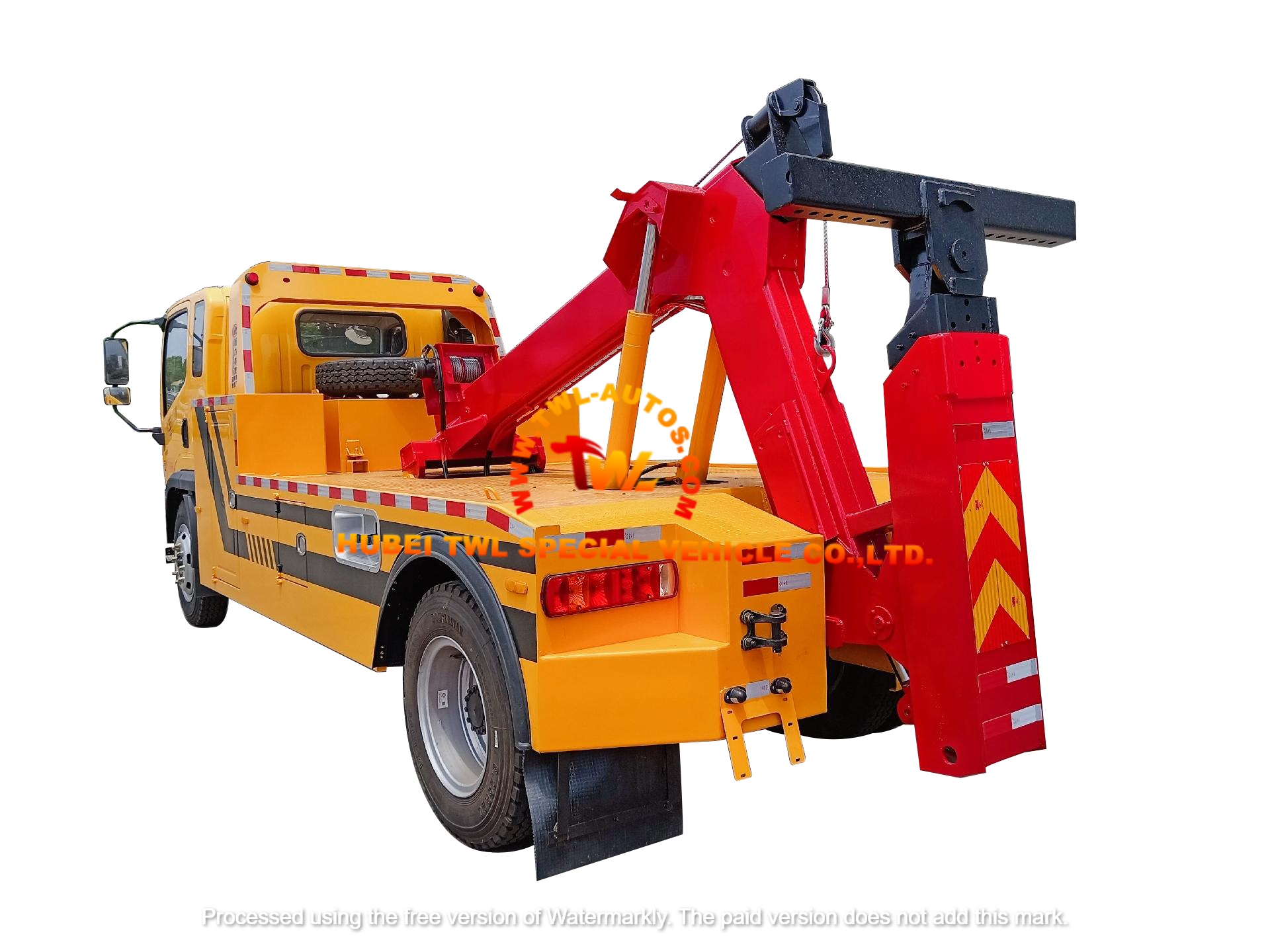
J6P Integrated Tow Truck’s outriggers are rated at 80 kN each. There are two of them. With an L-type rear outrigger that spans 4080 mm aswell. Because they’re holding tons of equipment and a casualty off the back, not just keeping the trucksteady themselves.
Pick up any integrated tow truck and take a look at the outrigger pads. Now look at the ground they’ll actually sit on when you’reworking. Oil softer than those pads? Gravel? Hot metal asphalt tearing through pad material like a hot knife through butter? Pad surface area is what keeps outriggers from sinking into dirt. Ask about extension speed too because if you’re on a live motorway the amount of time between arriving on scene and being setup safely is time spent trapped in traffic.
Outriggers aren’t standard on every integrated truck, so if yours needs them ask about them before buying.
Chassis Options and 24V Electrical Systems
Selecting chassis isn’t something you have to worry about.The opposite is true.
TWL offer builds on FAW, Sinotruk HOWO, Shacman, Foton and Isuzu as standard chassis options. You’re picking from multiple top brands.
Pick one your local workshop actually stocks parts for. Because a recovery truck that spends three weeks waiting for a chassis part to turn up from across the country is a recovery truck that earns you no money. Not matter how good everything else on it is.
Electrics are 24V across the board, LED lighting packages available as standard along with beacons, tool lockers and cab air-con. Worth considering your lighting setup before taking delivery; yourcrew will be working next to fast-moving traffic at night. Being seen is as much a safety mechanism as anything else.
Integrated Tow Truck Capacity Table: 3-Ton to 25-Ton Models
Twomore. Commercial stuff, really.
There’s aren’t a huge range to sort through because Three models cover 99% of everything you’ll encounter in commercial recovery. Have them side by side for easy comparison here:
| Model | Underlift Lifting | Boom / Hoisting | Typical Work |
| FAW Tiger VR light duty | Light duty, one-to-one | Compact boom | Cars, vans, urban breakdown recovery |
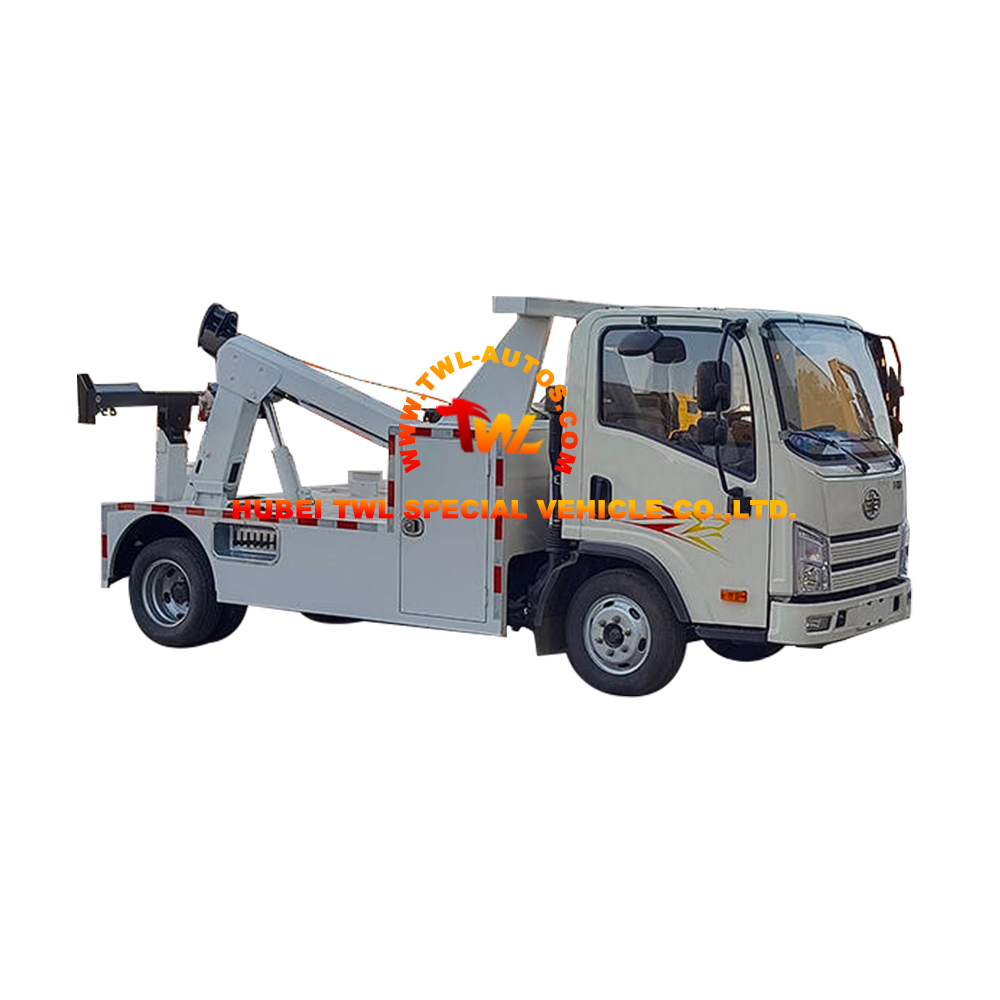
| FAW 3 Tons integrated | 3 tonnes | Light telescopic boom | Cars, light commercials, city centres |
| FAW J6P 8×4 integrated | 25 tonnes | 2-section telescopic, 4,858–8,154 mm, 25,000 kg | Trucks, buses, heavy commercial recovery |
| Winch options | 10 / 15 / 25 tonnes | Twin winches, CE certified | Specified to match recovery duty |
| Towing capacity (J6P) | Over 100,000 kg | Axle-rated, not underlift-rated | Heavy casualties on highway routes |
| Outriggers (J6P) | 2 x 80 kN | L-type rear, 4,080 mm | Side lifting and boom stability |
| Chassis choice | FAW, Sinotruk, HOWO, Shacman, Foton, Isuzu | Match to local parts network |
See the problem? Jumping from 3 tonnes to 25 isn’t gradual. They’re completely different machines doing completely different jobs and if you cover enough mileage to fill both trucks… you’ll run one of each rather than settling for something in the middle.
Buying Direct from the Manufacturer vs Tow Truck Dealers
uying through Tow Truck Dealers means somebody else buys the truck, holds it for you until you want it then you pay a dealers margin and drive it away quicksmart. You lose heaps of money if you need a replacement truck this month and “waiting for stock” isn’t an option. To upside? You get whatever truck is on the lot.
Buying direct from the manufacturer means you get to specify chassis, winch option, boom capacity, light bars AND paint job yourself. You talk directly with the people who built it should you need parts in year four rather than going through firmware who bought quantity X from truck manufacturer three years ago. You wait for it to be built then sort shipping. For reasons I mentioned above, most fleets find the spec control alone is enough to decide.
Why Choose TWL When You Buy Tow Trucks
TWL, or HUBEI TWL SPECIAL VEHICLE CO., LTD to give them their full name,is part of the larger CLW Group. They’re based in Suizhou City, Hubei Province. Population: 6 million+. 6 Million people who live in the area that builds a massive percentage of China’s special vehicles.
Lets dig into that and find out why:
Up until now we’ve been talking about parts TWL choose to be transparent about. Lifting and hoisting systems aren’t something they outsource either. Designed and built in-house by the parent CLW Group, TWL can publicly provide a component list like above because they know where everything comes from. Manufacturers are ISO 9001 and ISO 14001 certified. Partner across Dongfeng, Sinotruk, FAW, Foton, Shacman, ISUZU, JAC, JMC and Kama meaning your chassis brand isn’t an afterthought either.
Vehicle support is backed by a minimum 12 month warranty or 25,000 to 50,000 km from arrival (whichever comes first). Parts within that period are shipped free (wear items excluded). Remain available at factory cost when that expires. There’s 24 hour after-sales service should anything go wrong after delivery. Operation manuals and videos will be provided to help maximise that lifespan and theyrecommend ordering approximately USD 500 to 800 worth of basic spares with your truck. Parts shipped at no extra freight charge.
TLDR: Compatibility with my article proves you’ve made it to the end. Buy them a truck.
FAQ
What is the difference between an integrated tow truck and a rotator?
An integrated truck is built with a telescopic boom. Boom extends and lifts in the same direction the vehicle faces. Rotators feature a boom that can pivot 360 degrees continuously allowing the operator to pull from any angle without turning the truck. They cost significantly more as a result. That investment pays for itself on motorway work where stopping traffic to change position comes at a premium. If you’re working general roadside recovery an integrated truck matches a rotators capabilities at a fraction of the price.
How much can a 25-ton integrated tow truck actually tow?
The FAW J6P model 8X4 integrated wrecker tow truck shown here lifts 25 tonnes under its underlift. Tow rating of the same truck is over 100,000 kg. Those are measuring different strengths: the underlift is how much weight the integrated boom can raise off the ground. Towing is the max weight the axles can pull once the casualty is in motion. Always double check which figure your quoted towing vs lifting capacity refers to before comparing trucks.
Can I choose the chassis brand for my tow truck?
Yes. TWL have deals with FAW, Sinotruk, HOWO, Shacman, Foton and Isuzu meaning you CAN pick your chassis brand. You should pick the brand your local recovery workshops stock parts for because time spent waiting on chassis parts from overseas will kill your recovery uptime faster than any tangible differences in chassis quality.
Where can I find integrated tow trucks for sale from China?
Suizhou City, Hubei to be exact. As part of the larger CLW Group.
Buying direct from the manufacturer rather than a middle-man trading company is always recommended where possible. Ensure you can specify your own components, get someone who actually builds the trucks when you need parts years down the line and save a heap of cash. TWL export with full documentation,so finding integrated tow trucks for sale from China isn’t difficult. Helpful tip: send them your chassis preference, required lifting capacity, steering side and which market you’re buying for. Ask for a quotation on a Tow Truck For Sale built exactly how you need it.
Conclusion
The specifications that decide whether an Integrated Tow Truck is still working in year ten are mostly invisible in a brochure. Italian hydraulic valves rather than unnamed ones. H70 steel formed in one step on a 1000T press rather than welded from sections. CE-certified winches rated honestly. Outriggers with enough pad area for soft ground.
So when you Buy Tow Trucks, ask for the component list by brand, confirm whether a capacity figure means lifting or towing, and pick the chassis your local workshops already service. Those three questions will tell you more about a supplier than any amount of time spent comparing headline tonnage.
TWL build anything from 3 tonne light duty to 25 tonne heavy recovery integrit tow trucks in Suizhou, Hubei China. Got questions? Want to talk through your job before confirming a specification that suits you? Call or email using the links below, or jump straight to our official website for more product information.
Phone: +86 135 4506 4324
Email: [email protected]
Website: https://www.twl-autos.com/