Introduction
Purchasing considerations for an LPG Tank Truck are quite different from those for a normal cargo truck. You are purchasing a pressure vessel designed to transport a cargo that will burn your house down if given half a chance. Get the specification wrong and the vehicle will pay you no money as it sits unused.
Capacity and cost are where most purchasers begin their considerations. However there are 6 other considerations that will determine if your truck passes certification for your market, survives your routes and still functions correctly in year three. All 8 are discussed below, with figures you should verify on any quote you are provided.
How To Choose LPG Tank Truck: 8 Factors B2B Buyers Must Check
Tank Capacity: 6 To 35.5 Cubic Metres Designed Around Your Routes
Capacity follows route choice, not aspirations. Ordering a truck sized for your dream contract means shipping pavement every day you run light.
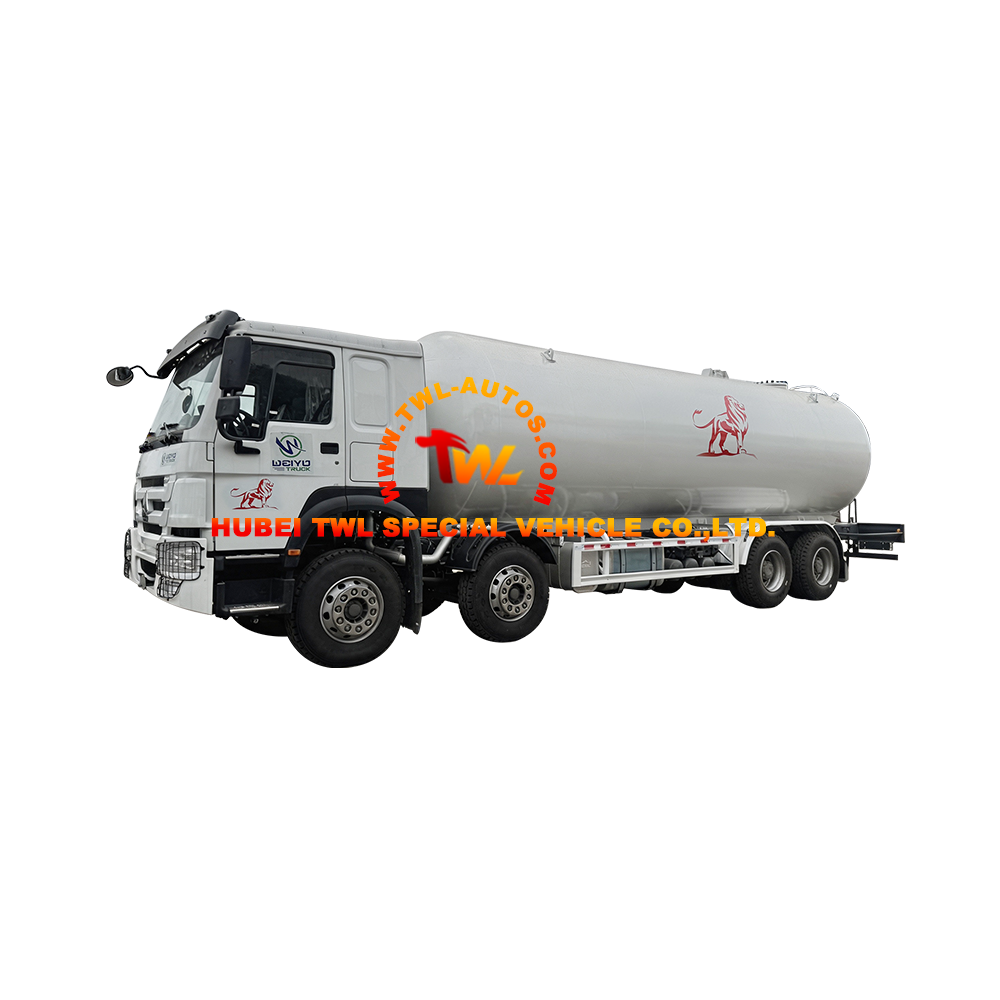
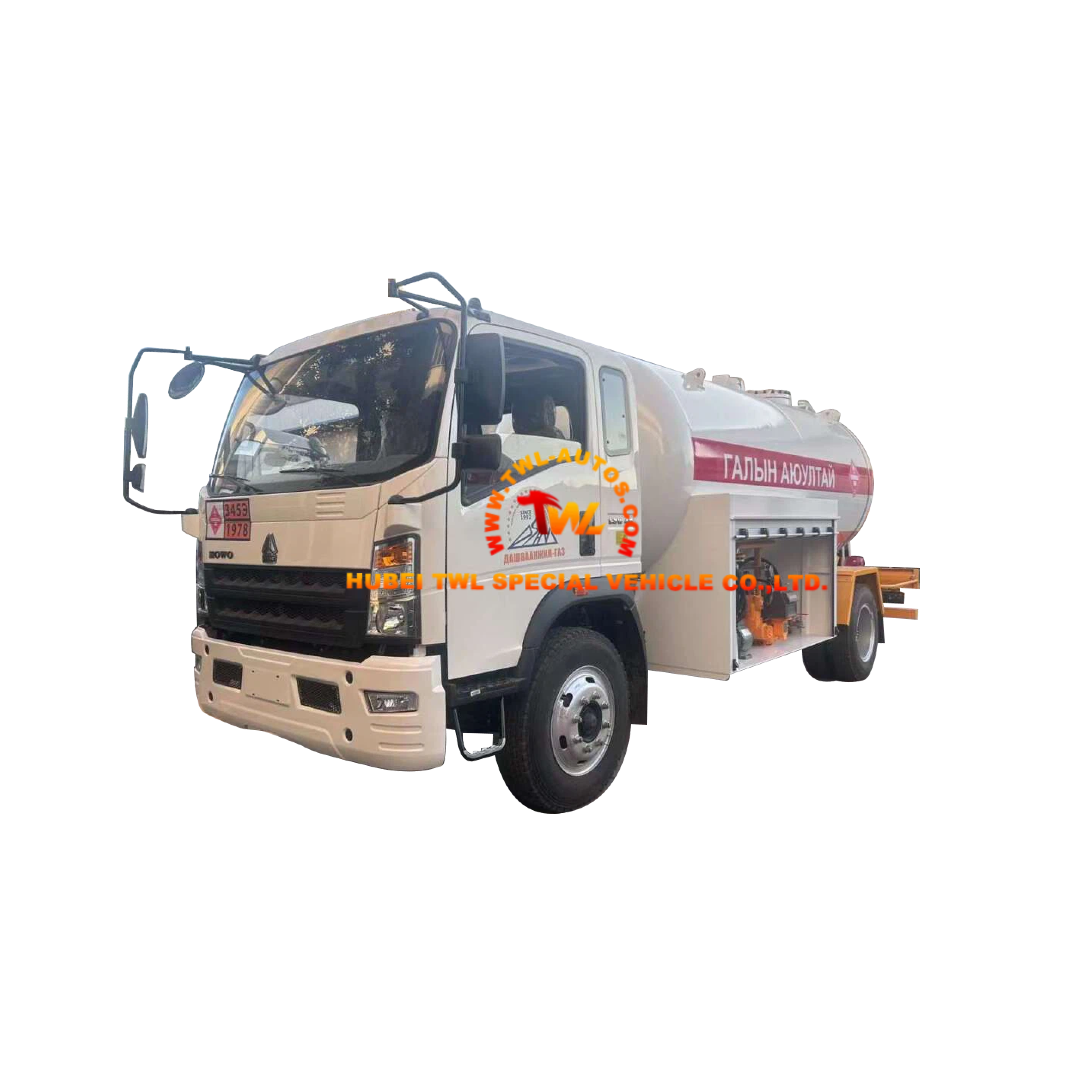
Bobtails starting at 6 tonnes are great for city cylinder refilling or residential routes where boxes don’t fit but agility does. Medium capacity tanks between 10 and 20 cubic metres work well on regional routes to filling stations. Large tanker trucks in the 30 to 35.5 cubic metre range are better suited to high-volume terminal- to-depot operations where you want every trip maximally loaded.
Keep destination countries axle weight limits in mind ahead of ordering. Our Liquefied Petroleum Gas Tanker Truck models are designed around specific national regulations. Legal configurations in one market may push total or axle weights over limits in other markets.
Chassis Selection: Howo, Shacman, Isuzu And Dongfeng
Your chassis choice impacts more than performance specifications. It directly affects resale value, parts availability and driver familiarity in your target market.
Pick a brand your local repair shops service already. HOWO and Shacman have broad, comprehensive parts networks all over Africa and the Middle East. Isuzu has its fans where reliability and fuel efficiency are worth paying top dollar for. Dongfeng and FAW provide excellent value for more budget-conscious purchases.
TWL can build on all the above chassis — specify what sells in your market, don’t accept second-hand inventory from your supplier.
Tank Material And Pressure Rating
Here we draw a line in the sand. Not all companies building tank trucks are manufacturers. TWL constructs tanks out of Q345R pressure vessel steel — not mild structural steel — working with 12 mm thickness on the barrel and 14 mm on the head and tail caps.
Pressure ratings are another detail where TWL leads the industry. Our tanks are engineered to 1.61MPa and tested at 2.1 MPa, giving you a safety margin of about 30% over working pressure. Ask your supplier for tank test pressure. If they send you a quote with capacity and price only, that’s the detail they’re omitting.
Always request a copy of the pressure vessel certificate with your order. You can’t clear customs or pass periodic inspection in most countries with an LPG Gas Tank Truck whose tank isn’t documented.
Engine Power And Transmission For Load And Terrain
Engine torque should suit your route’s terrain, not a spec sheet. TWL’s largest 8×4 35.5 cubic metre truck uses a WEICHAI engine rated at between 365 HP and 400 HP because those numbers work with a GVW of 31,000 kg and payload of 19,720 kg.
If you have flat regional routes those numbers can be slightly lower. Mountainous or off-road routes require the higher horsepower to prevent gearbox and clutch loss when climbing grades with a fully loaded tanker — and those are repairs no warranty will cover. Double-check your chosen transmission ratio is suitable for your routes too. Don’t just assume the horsepower number is correct.
Safety Systems: Relief And Emergency Shut-Off Valves, Gauge And Anti-Static Measures
There are cut corners to be found in safety equipment, and it’s the one place you should never cut. Relax, we aren’t suggesting you ditch ANY safety features. But make sure your truck arrives with…
Safety relief valves, emergency shut-off valves (DN25 and DN50) on both stages, a floating ball level gauge, pressure gauge, thermometer and anti-static grounding.
Those red emergency shut-off valves are why we put this section first. An ERVO allows the driver to isolate the tank immediately should a hose break during filling. Most LPG accidents happen during tanker to cylinder or tanker-to-tank transfers. Make sure DN25 and DN50 appear on your quotation by size. Some sellers will attempt to trick you by saying “safety valves included” without specifying which types.
Loading Equipment: LPG Transfer Pumps, Flow Meters And Retractable Hose
ICYMI … you’re hauling LPG, not gasoline. Unless you have bulk tanker dedicated accounts your truck will be stopping to load as often as it does unload.
TWL trucks come standard with an LPG pump with 2 inch connection points, a flow meter to measure throughput, and a 15 metre retractable hose. That meter isn’t just for show either. You can charge by the litre at delivery instead of guessing, removing yet another point of friction with customers.
How close can you park to a tank? That depends on your hose. 15 metres will suffice for most filling station accounts and depot operations. Verify that hose length meets your needs before buying.
LHD Or RHD, Emission Standard And Local Compliance
Three other compliance decisions need to be made before production begins, because they all become locked-in at that point and cannot be changed afterwards.
The steering side is the obvious one but gets overlooked during first orders. Your emission standard will need to meet your import requirements – asking for higher certifications than necessary will increase costs, asking for lower will lock you out of registering the blocks. Local pressure vessel certifications can differ from market to market. Some countries require third-party inspection while others mandate certifications from certain valve companies.
If you email your national requirements to a manufacturer at enquiry stage they should reply with questions if they do not already know your answers. Any LPG Gas Tanker Truck supplier that doesn’t ask you about your local compliance standards does not intend to meet them.
Warranty, Spare Parts And After-Sales Support
While purchase price gets the new truck home, the support terms determine your total cost of ownership from year two onward.
TWL’s warranty is a minimum 12-months or 25,000 to 50,000 km (whichever comes first) against defects from date of shipment arrival. Within this period all replacement parts and components are supplied free of charge by air, sea or courier excluding easy wearing parts. Post-warranty parts are available at cost from factory. Technical support is for life and we will also arrange operator training courses after sale if your staff need to visit overseas before commissioning starts.
TWL recommends that customers also order approx USD 500 – 800 worth of basic spare parts with the truck which we will ship at no freight charge. When that waterproof seal you didn’t realise you needed fails and your stuck waiting for a supplier to import it you will be thankful these seemingly unnecessary grey parts saved you weeks of downtime.
TWL Built-In Tank Trucks 6 To 35.5 Cubic Metres Compared
This table pits five TWL models against each other on the specs you use to select the model that’s right for your operation.
| Model | Capacity | Chassis and Drive | Application |
| Sinotruk HOWO 8×4 | 35.5 m³ | HOWO 8×4, WEICHAI 365–400 HP | Bulk terminal to depot haulage |
| Sinotruk HOWO 6×4 | 30 m³ | HOWO 6×4 | Long-distance bulk distribution |
| Shacman X5000 | Bulk tanker | Shacman X5000, 345 HP | Regional bulk transport |
| HOWO 12m Bobtail | 6 tons | HOWO, bobtail configuration | Cylinder refilling, urban delivery |
| Isuzu Giga 6×4 | 10 tons | Isuzu Giga 6×4 | Station refilling, mixed routes |
Tank truck capacity and manoeuvrability tend to move in opposite directions. The HOWO 8×4 carries the most cargo, but an urban pickup location with limited clearance could stop it in its tracks while the HOWO bobtail truck would have no problem accessing the site. When choosing your chassis, let your local parts infrastructure guide you. All these trucks will do the job you need them to.
Why Pick TWL As Your LPG Tank Truck Supplier?
Located in Suizhou City where China’s special vehicle manufacturing industry clusters, HUBEI TWL SPECIAL VEHICLE CO., LTD is a subsidiary of CLW Group. TWL has established relationships with Dongfeng, Sinotruk, FAW, Foton, Shacman, ISUZU, JAC, JMC and Kama for chassis. You’re not limited to just one brand when you pick TWL as your supplier.
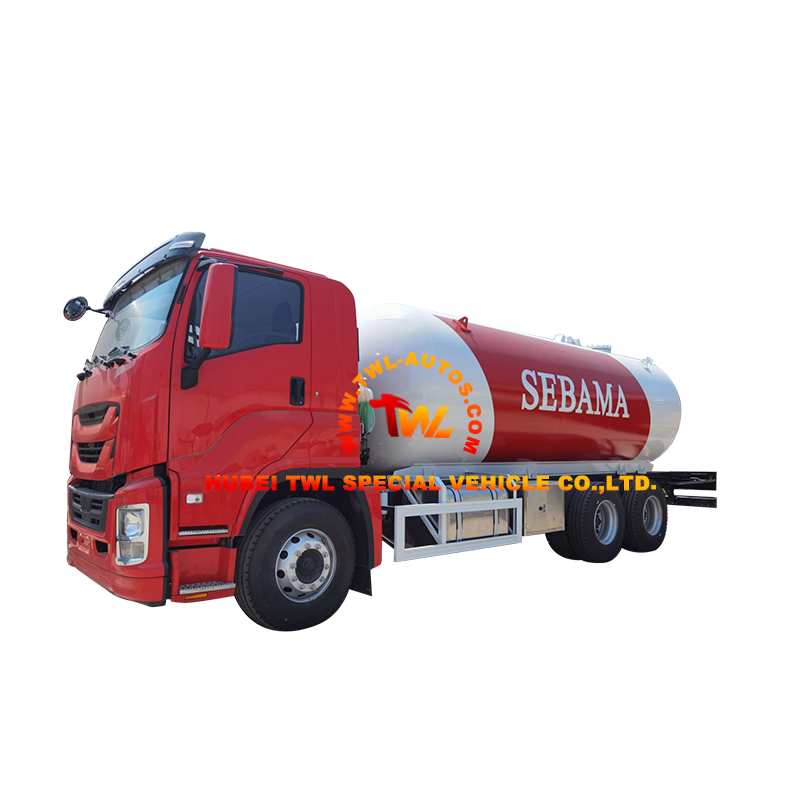
Capacity, chassis brand, steering side, emission standard, pump and metering can all be customized, as can your truck’s paint job. We provide export declaration and logistics if needed. After sale service is available 24 hours a day. Product operation manuals and how-to videos are included after delivery.
FAQ
Do I get an LPG tank truck or an LPG tanker trailer?
Opt for a rigid LPG Tank Truck where one truck needs to do it all, including negotiating narrower access and shorter delivery runs. Opt for tanker trailers if you’re expanding an existing fleet of tractor units and wanting largest possible payload over longer distances. Tanker trailers hold about 40 to 60 cubic metres versus 35.5 cubic metres at max volume; you’ll need a tractor to tow them, though, and they won’t fit in restricted delivery sites.
How do I purchase an LPG tank truck from China?
Buy directly from the factory instead of a trading company so you can specify your preferred tank material, test pressure, chassis brand and additional safety equipment. TWL Trucks is based in Suizhou, China’s Hubei province and exports world-wide with proper certification. Email your desired capacity, chassis brand request, steering side and emission standard. Ask for the pressure vessel certificate when you request a quotation.
What guarantee/support does TWL offer on tank trucks?
TWL Trucks gives a basic 12-month warranty or 25,000 to 50,000 km warranty, whichever occurs first, calculated from when your shipment arrives. Parts are delivered free of charge during this period, if your parts are not easy wearing parts(exclude tyres, filters,sheets etc.). Following period, you can buy from us with factory prices. TWL will also offer you FREE technical support forever, and of course we can help to organize operators training if necessary. Every truck we recommend to include basic spareparts package which should be about USD 500-800.
How do I know what size tank I need?
Align your tank capacity with average deliveries per day and any limiting access restrictions. Pick a tank truck carrying 6 to 10 tonnes if you’re refilling cylinders or doing lots of urban deliveries. Choose a tanker with 10 to 20 cubic metres capacity for regional deliveries to fuel stations or supply terminals. Bulk delivery between terminals and storage depots is typically done with tanks in the range of 30 to 35.5 cubic metres. Check your country’s axle weight regulations before ordering — legislation usually limits capacity before the tank itself does.
What kind of tank should be used in an LPG tanker truck?
Don’t allow manufacturers to use Q345 or plain structural steel for the tank. Ask to see certification that the pressure vessel is made from Q345R steel. TWL Tanks are manufactured with 12 mm thickness for tank barrel and 14 mm thickness for end plates with design pressure is 1.61MPa, hydrostatic testing pressure reaches 2.1MPa. Also always ask for the design pressure and test pressure figures when you ask for the pressure vessel certificate. A quotation without those figures is hiding what specification matters most on your tanker truck.
Conclusion
Selecting an LPG Tank Truck doesn’t have to be difficult. Follow these eight checks, which take less than an afternoon, and you’ll avoid decades of frustration: size the tank to your actual delivery needs instead of your largest desired contract, choose a chassis that your local mechanic shops already have experience with, demand Q345R steel with design and test pressures clearly listed, size the engine to the hauling conditions you will face, not the paper it will arrive on, verify that the DN25 and DN50 emergency shut-off valves are included in the quotation by checking their sizes, specify pump and metering if you plan on selling at delivery, agree on steering side and emission certification before manufacturing starts, and read the warranty before checking the price.
TWL can build trucks in all five of the configurations discussed here, on chassis from every major Chinese manufacturer. Both pressure vessel certification and documentation for exporting your truck are included with every truck we build.
Drop us a line (TWL) at +86 135 4506 4324 or [email protected] or visit www.twl-autos.com to discuss your needs or ask for a quote. Provide your required tank volume, chassis preference if you have one, steering side and target market and we’ll generate a specification sheet and quote for your route.