Introduction
The demand for efficient vehicle recovery equipment continues to grow as transportation networks expand and commercial fleets become larger. For towing companies, roadside assistance providers, municipalities, and vehicle recovery operators, choosing the right recovery vehicle directly affects operational efficiency, safety, and long-term profitability.
An Integrated Tow Truck is a specialized recovery vehicle that combines a hydraulic boom system and wheel lift mechanism into one integrated towing unit. Compared with traditional tow trucks that rely on separate recovery equipment configurations, an integrated towing truck provides faster deployment, stronger lifting capability, and greater flexibility for handling different vehicle types.
For businesses looking for an Integrated Tow Truck For Sale, understanding the structure, working principles, applications, and purchasing considerations is essential before making an investment decision.
As an experienced Tow Truck Manufacturer, TWL provides professional recovery vehicle solutions designed for different towing requirements, including commercial towing operations, municipal services, and heavy-duty vehicle recovery.
Need A Reliable Integrated Tow Truck Solution?
TWL specializes in manufacturing customized tow trucks with advanced hydraulic recovery systems for global towing businesses.
What Is An Integrated Tow Truck?
2.1 Integrated Tow Truck Definition
An Integrated Tow Truck is a recovery vehicle that integrates multiple towing functions into a single hydraulic system, mainly including a boom lifting mechanism and wheel lift equipment.
Unlike conventional tow trucks that may require separate attachments or manual adjustment procedures, an integrated tow truck uses a unified recovery body design to improve towing speed and operational convenience.
The main purpose of an integrated towing truck is to safely lift, secure, and transport disabled or illegally parked vehicles while minimizing preparation time.
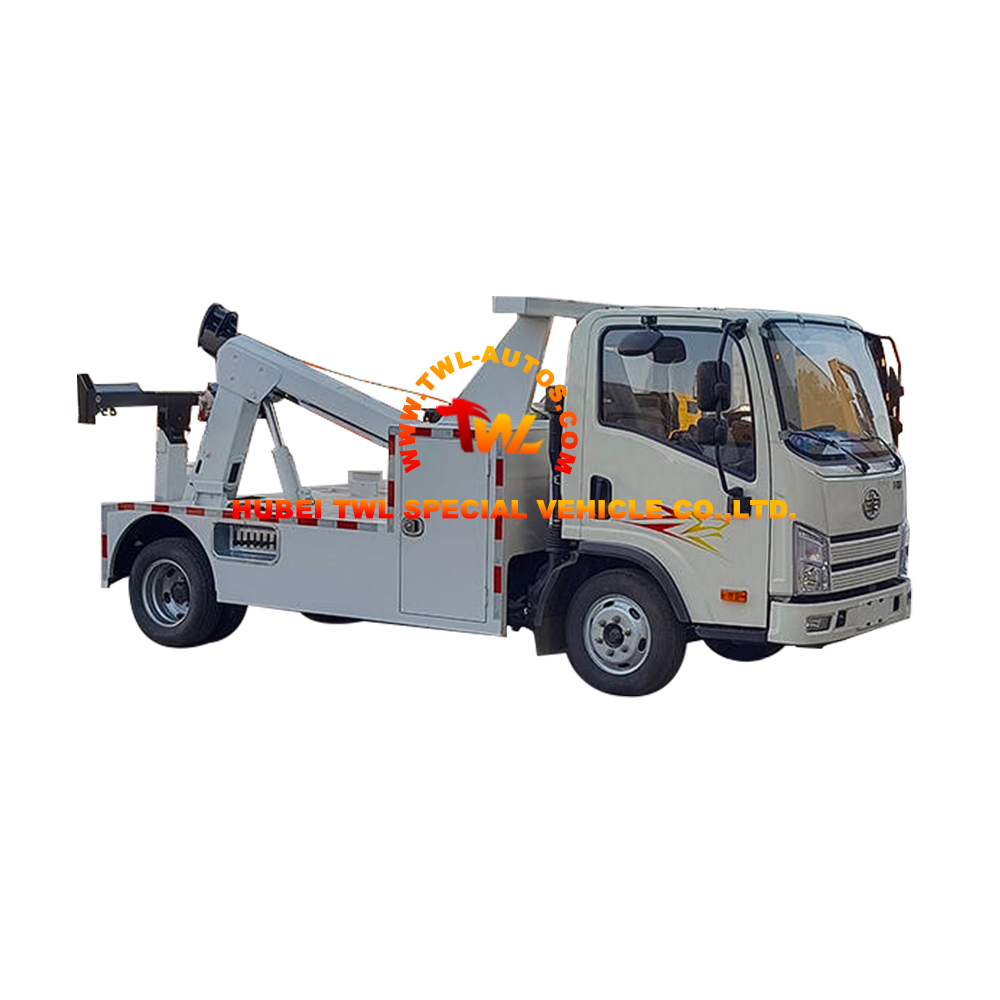
A typical integrated tow truck includes:
● Hydraulic boom system: Provides lifting and pulling capability for damaged or immobilized vehicles.
● Wheel lift system: Secures the front or rear wheels for towing without full vehicle loading.
● Hydraulic control system: Allows operators to control lifting, extension, and recovery operations.
● Recovery body: Supports towing equipment and ensures structural strength during operation.
Because of its combined design, an integrated tow truck can handle a wide range of recovery tasks, from passenger vehicles and SUVs to commercial vehicles depending on the truck configuration.
For fleet operators and towing companies, selecting an integrated tow truck means investing in a multifunctional recovery solution that can improve daily productivity.
2.2 How Does An Integrated Tow Truck Work?
An integrated tow truck works through a hydraulic-powered recovery system that controls the boom, wheel lift, and towing mechanisms.
The operating process usually includes four main steps:
Step 1: Vehicle Positioning
The tow truck operator positions the recovery vehicle close to the disabled vehicle while selecting the appropriate towing method according to vehicle size and condition.
Step 2: Hydraulic Equipment Deployment
The hydraulic boom or wheel lift extends from the recovery body. Operators use hydraulic controls to adjust the equipment position and prepare for vehicle connection.
Step 3: Vehicle Lifting And Securing
The wheel lift attaches to the vehicle wheels, while the boom provides additional lifting or pulling force when required. Safety chains and locking systems secure the vehicle before transportation.
Step 4: Vehicle Transportation
After confirming stability, the integrated tow truck transports the recovered vehicle to the destination while maintaining safe handling performance.
The combination of hydraulic lifting and integrated recovery equipment allows operators to complete towing tasks faster compared with many traditional recovery methods.
Looking For A Heavy Duty Integrated Tow Truck?
TWL manufactures integrated recovery trucks with durable chassis options and customized hydraulic configurations for professional towing operations.
Main Components Of An Integrated Tow Truck
An integrated tow truck is designed with several key systems that work together to achieve efficient vehicle recovery. The performance of the truck depends largely on the quality of its hydraulic components, recovery structure, and control system.
For businesses purchasing an Integrated Tow Truck For Sale, understanding these components helps evaluate equipment reliability, maintenance requirements, and long-term operating performance.
3.1 Hydraulic Boom System
The hydraulic boom system is one of the most important components of an integrated tow truck. It provides the lifting, pulling, and recovery force required to move disabled vehicles safely.
Unlike basic towing systems, a hydraulic boom uses hydraulic cylinders to generate controlled movement with high lifting capacity. This allows operators to recover vehicles from challenging situations, including roadside breakdowns, accident scenes, and restricted areas.
Key features of a professional hydraulic boom system include:
● Strong lifting capability: Designed to handle different vehicle weights depending on the truck configuration.
● Flexible operation: Hydraulic extension and rotation improve recovery efficiency in limited spaces.
● Stable performance: Reduces manual operation requirements and improves operator safety.
● Durable construction: Heavy-duty materials ensure reliable performance under frequent towing conditions.
For a Heavy Duty Integrated Tow Truck, the hydraulic boom must provide sufficient strength and stability to recover larger vehicles such as trucks, buses, and commercial vehicles.
A high-quality boom system directly affects towing efficiency, equipment lifespan, and overall recovery capability.
3.2 Wheel Lift System
The wheel lift system is another essential component of an integrated tow truck. It allows operators to lift the front or rear wheels of a vehicle while keeping the remaining wheels on the ground.
Compared with traditional towing methods, a wheel lift provides faster vehicle attachment and requires less preparation time.
The main advantages of a wheel lift system include:
● Quick vehicle connection: Reduces loading time during roadside recovery operations.
● Lower vehicle damage risk: Proper wheel positioning helps protect the vehicle during transportation.
● Wide application range: Suitable for cars, SUVs, vans, and certain commercial vehicles.
● Improved operator convenience: Hydraulic controls simplify the towing process.
An integrated tow truck with a hydraulic boom and wheel lift provides a flexible solution for companies handling different types of recovery tasks.
This combination makes integrated recovery trucks popular among roadside assistance providers and professional towing fleets.
3.3 Recovery Body And Hydraulic Control System
The recovery body provides the structural foundation for the towing equipment. It connects the hydraulic boom, wheel lift, storage compartments, and supporting components into one complete recovery platform.
A well-designed recovery body should provide:
● High structural strength: Supports continuous towing operations and heavy loads.
● Corrosion resistance: Improves durability in outdoor working environments.
● Optimized weight distribution: Enhances driving stability and vehicle handling.
● Easy maintenance access: Simplifies inspection and repair procedures.
The hydraulic control system manages the operation of the boom and wheel lift. Modern integrated tow trucks typically use centralized control systems that allow operators to perform recovery tasks more accurately.
Important hydraulic system considerations include:
| Component | Function | Buyer Consideration |
|---|---|---|
| Hydraulic Pump | Provides hydraulic power | Check efficiency and durability |
| Hydraulic Cylinder | Controls lifting movement | Evaluate load capacity |
| Control Valve | Regulates hydraulic operations | Ensure precise operation |
| Hydraulic Tank | Stores hydraulic oil | Consider capacity and maintenance |
When selecting an integrated tow truck manufacturer, buyers should carefully evaluate hydraulic system quality because it directly impacts recovery performance and operating reliability.
Advantages Of Using An Integrated Tow Truck
For towing companies, government fleets, and vehicle recovery businesses, an integrated tow truck offers several operational advantages compared with traditional towing solutions.
Its integrated design improves efficiency while reducing the complexity of managing multiple recovery vehicles.
4.1 Higher Towing Efficiency
One of the biggest advantages of an integrated tow truck is improved towing efficiency.
Because the boom and wheel lift are combined into a single recovery system, operators can complete vehicle attachment and recovery operations faster.
Benefits include:
● Shorter vehicle loading time
● Faster roadside response
● Reduced labor requirements
● Higher daily towing capacity
For roadside assistance companies, faster recovery directly improves customer satisfaction and business productivity.
4.2 Better Versatility For Different Vehicles
An integrated tow truck can handle a wider range of vehicles compared with specialized towing equipment.
Depending on the configuration and towing capacity, it can be used for:
● Passenger cars
● SUVs and pickup trucks
● Commercial vehicles
● Light-duty trucks
● Fleet vehicles
This versatility makes integrated tow trucks a practical choice for companies that need one vehicle to perform multiple recovery tasks.
For businesses purchasing a custom integrated tow truck, manufacturers can adjust chassis selection, lifting capacity, and recovery equipment according to specific operational needs.
4.3 Improved Safety And Stability
Safety is a critical factor in professional vehicle recovery operations.
Integrated tow trucks improve safety through:
● Hydraulic-controlled lifting operations
● Secure wheel attachment systems
● Stable recovery body design
● Reduced manual handling requirements
A properly designed integrated recovery system minimizes risks during vehicle loading, transportation, and unloading.
For operators working in busy traffic environments, improved stability can significantly enhance workplace safety.
4.4 Lower Operating Costs
Although the initial investment may be higher than basic towing vehicles, an integrated tow truck can reduce long-term operating expenses.
Cost advantages include:
● One vehicle performing multiple towing functions
● Reduced equipment replacement requirements
● Lower labor costs through easier operation
● Improved fleet utilization
For commercial towing companies, choosing a reliable Tow Truck Manufacturer helps ensure better equipment durability and a higher return on investment.
Upgrade Your Towing Fleet With TWL
Choose TWL integrated tow trucks designed for efficiency, safety, and customized recovery requirements.
Integrated Tow Truck Applications
Integrated tow trucks are widely used across different industries because of their flexibility and efficient recovery performance.
From roadside emergency services to government vehicle management, these trucks provide reliable solutions for professional vehicle recovery operations.
5.1 Roadside Assistance Services
Roadside assistance companies are among the most common users of integrated tow trucks.
These businesses require vehicles that can respond quickly to:
● Vehicle breakdowns
● Traffic accidents
● Emergency towing requests
● Illegal parking recovery
The combination of hydraulic boom and wheel lift allows operators to complete recovery tasks efficiently in urban areas, highways, and remote locations.
An integrated tow truck is especially suitable for roadside service providers that need fast response times and flexible towing capability.
5.2 Vehicle Transportation Companies
Vehicle transportation companies often manage multiple vehicle types and require reliable recovery equipment.
Integrated tow trucks help these businesses:
● Transport damaged vehicles
● Move fleet vehicles
● Recover non-operational cars
● Support logistics operations
The ability to handle different vehicle categories makes integrated recovery trucks valuable additions to transportation fleets.
5.3 Municipal And Government Services
Municipal departments and government agencies frequently use tow trucks for public infrastructure management.
Applications include:
● Road clearance operations
● Abandoned vehicle removal
● Public safety support
● Emergency response services
Government buyers typically require durable vehicles with reliable performance, easy maintenance, and long service life.
5.4 Heavy-Duty Recovery Operations
For demanding recovery environments, a Heavy Duty Integrated Tow Truck provides stronger lifting capability and improved operational performance.
Heavy-duty models are commonly used for:
● Commercial truck recovery
● Bus and fleet vehicle recovery
● Industrial transportation support
● Accident recovery operations
When selecting a heavy-duty integrated tow truck, buyers should evaluate chassis strength, hydraulic capacity, and recovery equipment specifications.
Integrated Tow Truck Vs Other Tow Truck Types
When choosing a recovery vehicle, buyers often compare integrated tow trucks with other common towing solutions, including flatbed tow trucks, wheel lift tow trucks, and traditional wrecker trucks.
Each type has different advantages depending on the application, vehicle type, and operating environment. Understanding these differences helps towing companies and fleet operators select the most suitable equipment.
6.1 Integrated Tow Truck Vs Flatbed Tow Truck
An integrated tow truck and a flatbed tow truck are two popular recovery solutions, but they are designed for different towing requirements.
A flatbed tow truck transports vehicles by loading the entire vehicle onto a flat platform. This method provides excellent protection because all wheels are lifted from the road surface.
An integrated tow truck, on the other hand, uses a hydraulic boom and wheel lift system to recover and tow vehicles more efficiently without requiring full loading.
| Comparison | Integrated Tow Truck | Flatbed Tow Truck |
|---|---|---|
| Loading Method | Wheel lift and hydraulic boom towing | Full vehicle loading onto platform |
| Recovery Speed | Faster deployment | Requires more loading time |
| Vehicle Protection | Suitable for most roadside recovery | Provides maximum vehicle protection |
| Operating Flexibility | High flexibility in urban environments | Better for long-distance vehicle transport |
| Equipment Size | More compact | Larger body structure |
ntegrated tow trucks are often preferred by roadside assistance companies because they can quickly respond to emergency situations.
Flatbed tow trucks may be more suitable for transporting luxury vehicles, damaged vehicles, or vehicles requiring complete isolation from the road.
The best choice depends on whether the priority is fast recovery efficiency or maximum transportation protection.
6.2 Integrated Tow Truck Vs Wheel Lift Tow Truck
A wheel lift tow truck is a simpler towing solution that mainly uses a wheel lift mechanism to lift the vehicle wheels.
Compared with a standard wheel lift tow truck, an integrated tow truck combines additional recovery capabilities through a hydraulic boom system.
| Comparison | Integrated Tow Truck | Wheel Lift Tow Truck |
|---|---|---|
| Recovery Capability | Higher due to boom + wheel lift combination | Limited to wheel lift operations |
| Vehicle Types | Wider range of applications | Mainly light-duty vehicles |
| Hydraulic Functions | Multiple hydraulic operations | Basic lifting function |
| Heavy Recovery | More suitable | Limited capability |
| Investment Cost | Higher initial cost | Lower purchase cost |
For businesses requiring more professional recovery capability, an integrated towing truck provides better operational flexibility.
Companies handling various vehicle types often choose integrated models because one truck can complete more recovery tasks.
6.3 Integrated Tow Truck Vs Traditional Wrecker Truck
Traditional wrecker trucks usually rely on a boom system for pulling and lifting damaged vehicles.
While traditional wreckers are effective for many recovery operations, integrated tow trucks provide a more complete towing solution by combining multiple functions into one system.
| Comparison | Integrated Tow Truck | Traditional Wrecker Truck |
|---|---|---|
| Equipment Integration | Boom + wheel lift combined | Mainly boom-based recovery |
| Operation Efficiency | Faster vehicle attachment | More manual adjustment required |
| Versatility | Suitable for multiple towing scenarios | Focused on recovery tasks |
| Operator Convenience | Hydraulic integrated control | May require additional procedures |
For modern towing fleets, integrated tow trucks offer improved productivity and are increasingly selected for professional recovery operations.
How To Choose The Right Integrated Tow Truck?
A suitable recovery truck should match your business applications while providing reliable performance over years of operation.
7.1 Consider Towing Capacity
Towing capacity is one of the most important factors when purchasing an integrated tow truck.
Different businesses require different recovery capabilities:
● Light-duty integrated tow truck: Suitable for passenger cars, SUVs, and small commercial vehicles.
● Medium-duty integrated tow truck: Designed for larger vehicles and fleet recovery.
● Heavy-duty integrated tow truck: Used for trucks, buses, and demanding recovery operations.
Before purchasing, buyers should consider:
● Average vehicle weight being recovered
● Maximum expected towing load
● Daily recovery frequency
● Operating environment
Selecting the correct towing capacity prevents equipment overload and improves operational safety.
7.2 Choose The Right Truck Chassis
The chassis is the foundation of an integrated tow truck and directly affects durability, driving performance, and payload capability.
Important chassis considerations include:
● Engine power and fuel efficiency
● Gross vehicle weight rating (GVWR)
● Wheelbase configuration
● Driving conditions and road environment
A professional tow truck manufacturer can help customers select suitable chassis options according to regional requirements and application scenarios.
For example, urban roadside assistance may require a more compact chassis, while heavy recovery operations need stronger chassis performance.
7.3 Check Hydraulic System Performance
The hydraulic system determines the actual working capability of an integrated tow truck.
Before purchasing, buyers should evaluate:
● Hydraulic lifting capacity
● Boom extension performance
● Control accuracy
● System durability
● Maintenance requirements
A reliable hydraulic system ensures smooth operation and reduces downtime caused by equipment failure.
For companies purchasing an Integrated Tow Truck For Sale, hydraulic quality should be considered one of the most important evaluation criteria.
7.4 Work With A Reliable Tow Truck Manufacturer
Choosing the right manufacturer is as important as selecting the truck itself.
A professional Tow Truck Manufacturer should provide:
● Customized vehicle solutions
● High-quality recovery equipment
● Technical support
● Reliable after-sales service
● Export experience
Working with an experienced manufacturer helps buyers receive a tow truck configuration that matches their operational needs instead of purchasing a standard model that may not fit their requirements.
Looking For A Custom Integrated Tow Truck?
TWL provides professional tow truck manufacturing solutions with customized chassis, hydraulic systems, and recovery configurations.
Choosing the right integrated tow truck requires careful evaluation of towing requirements, vehicle configuration, hydraulic performance, and manufacturer capability.
Integrated Tow Truck Price: What Factors Affect The Cost?
The price of an integrated tow truck depends on multiple factors, including chassis selection, recovery equipment configuration, customization requirements, and manufacturing location.
For buyers searching for an Integrated Tow Truck Price, understanding these cost factors helps create a realistic purchasing budget.
8.1 Truck Chassis Brand And Configuration
The chassis is one of the main factors affecting the final cost of an integrated tow truck.
Different chassis brands and configurations influence:
● Vehicle performance
● Payload capacity
● Fuel efficiency
● Maintenance costs
A heavy-duty chassis designed for commercial recovery operations will generally cost more than a light-duty chassis designed for basic roadside assistance.
8.2 Recovery Equipment Specifications
The recovery equipment configuration directly impacts pricing.
Important factors include:
● Hydraulic boom capacity
● Wheel lift design
● Hydraulic component quality
● Recovery body material
● Control system configuration
A heavy-duty integrated tow truck with advanced recovery equipment requires higher investment but provides stronger operational capability.
8.3 Loading Capacity And Custom Options
Customization requirements can also affect the final price.
Common customization options include:
● Different chassis models
● Special recovery equipment
● Additional tool compartments
● Lighting systems
● Color and branding requirements
For fleet operators and international buyers, customized integrated tow trucks can provide better long-term value by matching specific working conditions.
8.4 Manufacturing Location And Shipping Costs
For international buyers, manufacturing location and logistics expenses are also important cost considerations.
The total purchase cost may include:
● Vehicle manufacturing cost
● Export documentation
● Transportation fees
● Import duties
Working directly with a professional manufacturer can help reduce unnecessary intermediary costs and provide better customization support.
Why Choose A Professional Tow Truck Manufacturer?
Selecting the right Tow Truck Manufacturer is a critical decision for businesses that depend on recovery vehicles for daily operations. A professional manufacturer does not only provide a truck but also delivers a complete towing solution based on application requirements, working conditions, and fleet objectives.
For companies searching for an Integrated Tow Truck For Sale, purchasing directly from an experienced manufacturer offers several advantages.
Engineering And Customization Capability
Different markets and industries have different towing requirements. A professional manufacturer can customize the integrated tow truck configuration according to:
● Vehicle recovery applications
● Required towing capacity
● Local road conditions
● Chassis preferences
● Operator requirements
Whether a customer needs a light-duty roadside assistance vehicle or a Heavy Duty Integrated Tow Truck, the manufacturer should provide suitable engineering solutions.
Reliable Recovery Equipment Quality
The performance of an integrated tow truck depends heavily on the quality of its recovery components.
Professional manufacturers focus on:
● Strong hydraulic systems
● Durable recovery bodies
● Reliable wheel lift mechanisms
● High-strength structural components
High-quality components reduce maintenance frequency and improve vehicle service life, helping towing companies achieve better operational efficiency.
Factory Direct Support And After-Sales Service
Working directly with a manufacturer allows buyers to receive more professional technical support.
Advantages include:
● Direct communication with engineers
● Faster customization confirmation
● Better spare parts support
● Professional operation guidance
For international buyers, choosing a manufacturer with export experience is especially important because the supplier understands different market requirements and transportation procedures.
TWL focuses on providing reliable tow truck manufacturing solutions for global customers, helping businesses select suitable recovery vehicles according to their specific applications.
Partner With A Professional Tow Truck Manufacturer
TWL provides integrated tow truck solutions designed for towing companies, government fleets, and commercial vehicle recovery operations.
FAQ
What Vehicles Can An Integrated Tow Truck Tow?
An integrated tow truck can tow a wide range of vehicles depending on its towing capacity and configuration.
Common applications include:
● Passenger cars
● SUVs
● Pickup trucks
● Light commercial vehicles
● Fleet vehicles
● Some medium and heavy-duty vehicles
For larger vehicles such as buses or heavy trucks, buyers should select a heavy-duty integrated tow truck with suitable chassis strength and hydraulic capacity.
How Much Does An Integrated Tow Truck Cost?
The cost of an integrated tow truck depends on several factors, including:
● Truck chassis brand and configuration
● Towing capacity
● Hydraulic equipment specifications
● Customization requirements
● Shipping and import costs
A basic model may have a lower investment cost, while a heavy-duty customized integrated tow truck will require a higher budget due to stronger components and advanced recovery capabilities.
For accurate pricing, buyers should contact a professional tow truck manufacturer with their specific requirements.
Is An Integrated Tow Truck Suitable For Heavy-Duty Recovery?
Yes. A heavy-duty integrated tow truck is suitable for demanding recovery operations when equipped with a powerful chassis, high-capacity hydraulic boom, and reinforced recovery equipment.
Heavy-duty models are commonly used for:
● Commercial truck recovery
● Bus recovery
● Fleet emergency operations
● Industrial vehicle transportation
However, buyers should always select a model based on the actual vehicle weight and recovery requirements.
What Is The Towing Capacity Of An Integrated Tow Truck?
The towing capacity of an integrated tow truck varies depending on:
● Truck chassis model
● Hydraulic boom specifications
● Wheel lift design
● Recovery body configuration
Light-duty models may handle passenger vehicles, while heavy-duty models can recover larger commercial vehicles.
A professional manufacturer can recommend the correct configuration based on the customer’s application.
Can I Customize An Integrated Tow Truck?
Yes. Many manufacturers provide customized integrated tow truck solutions.
Common customization options include:
● Different truck chassis brands
● Recovery equipment configuration
● Hydraulic system upgrades
● Tool storage design
● Color and branding requirements
Customization allows businesses to obtain a recovery vehicle that better matches their operating environment and business model.
Where Can I Buy An Integrated Tow Truck For Sale?
Businesses can purchase integrated tow trucks from specialized tow truck manufacturers or vehicle suppliers.
When selecting a supplier, buyers should consider:
● Manufacturing experience
● Product quality standards
● Customization capability
● Export experience
● After-sales support
Purchasing directly from a manufacturer helps buyers receive better technical support and a vehicle configuration suitable for their business needs.
Conclusion
An Integrated Tow Truck is an efficient recovery solution that combines hydraulic boom technology and wheel lift capability into one versatile vehicle.
Compared with traditional towing equipment, integrated tow trucks provide:
● Higher towing efficiency
● Better operational flexibility
● Improved safety and stability
● Lower long-term operating costs
For towing companies, roadside assistance providers, municipalities, and commercial fleets, selecting the right integrated tow truck requires careful consideration of towing capacity, chassis configuration, hydraulic performance, and manufacturer reliability.
As a professional Tow Truck Manufacturer, TWL provides customized integrated tow truck solutions designed for different recovery applications worldwide.
If you are searching for an Integrated Tow Truck For Sale, TWL can help you choose the right recovery vehicle configuration to improve your towing operations.
Need A Reliable Integrated Tow Truck Supplier?
Contact TWL for customized tow truck manufacturing solutions and professional recovery vehicle support.