Introduction
Garbage collection isn’t glamorous work, but it’s one of those things everybody notices when it doesn’t happen.
If you’re buying a Dump Garbage Truck for your sanitation department, factory site or property management business, nine times out of ten you’ll face these same ten questions during the decision process. Here they are – answered honestly, with information that actually matters when deciding what truck to order.
Dump Garbage Truck FAQ: 10 Questions Municipal And Industrial Buyers Ask
What Is A Dump Garbage Truck And How Does It Work?
It tips its load out, that’s how. Dump Garbage Truck Waste is loaded into the cargo box, the truck drives to its unload point and a hydraulic lift mechanism tips the whole box forward so gravity takes care of the rest.
No fancy packing blade. No complicated compressing cycle to stop working when you need it most. Drive to the disposal site, open the tipping mechanism, gravity does its thing and the truck drives back for more. Simple is the whole point of these trucks, by the way. Simple and effective; they keep on working when flashier trucks are sidelined.
Sealed Box Or Open Box: Which Should You Choose?
Here’s your first decision, and it all comes down to where the truck will spend its time working.
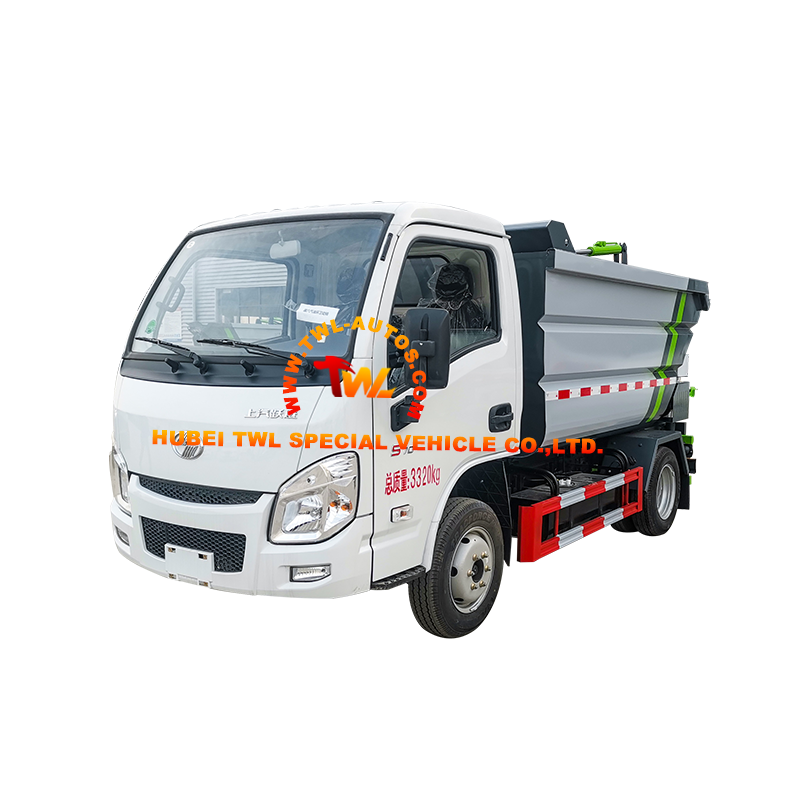
A sealed box has a top cover system. Dust stays inside. Odour stays inside. Rainwater and leaking liquids stay inside too. When you’re driving past people’s homes, that keeps calls to the council to a minimum. Open boxes have no top cover. Loading is quicker. They cost less, and you can dump material too big to fit in the rear opening of a covered body.
Factories, quarries, building sites and country collections are rarely on anything except a national waste disposal contract, so sealing is never an issue.
| Consideration | Sealed Box | Open Box |
| Odour and dust control | Fully contained | Open to air |
| Liquid leakage | Prevented by seals | Possible with wet waste |
| Loading speed | Slower, cover must open | Fastest, load from above |
| Bulky or oversized waste | Limited by cover opening | No height restriction |
| Best routes | Residential, city centre, food waste | Construction, mining, rural, green waste |
| Purchase cost | Higher | Lower |
| Cleaning effort | Wash-down of sealed box | Simpler, open access |
If your routes cover both, order sealed. You can always carry bulky waste in a sealed truck with the cover open, but you cannot make an open box stop leaking.
What Capacity Does Your Collection Route Need?
Tip tip size your body to your route, tip never to the largest load you imagine.
Add up your stops, estimate how much waste you pick up there and bulk that number up by 15%. Trust us. If your truck empties before you finish your rounds then you’re needlessly driving back to dump waste and losing an hour of billable labour on every collection round. Buy a truck big enough to overfill and you’re transporting heavy steel and burning fuel for no reason.
Another thing to consider is the roads you drive on. Lots of collection rounds have streets too narrow for a large Garbage Dump Truck to turn up, and that’s why some businesses run two smaller trucks instead of a single large one.
How Does The Hydraulic Dumping System Operate?
Fluid pressure lifts the front end of the cargo body, tilting it backwards. Waste then slides out by itself.
The driver controls the hydraulics from inside the cab or at a side-mounted control panel, and the whole tipping process takes about one minute. Simple means less to go wrong. That hydraulic lifting mechanism has far fewer moving parts than the packers and ejector blades you find on other trucks. Fewer moving parts means lower chances of mechanical breakdown. Important if your fleet runs six days per week.
Tip tip never use your truck on a slope. Parking on angle ground and attempting to dump loads is a great way to distort the cargo box.
What Does The Top Cover System Actually Do?
Three things. Stops waste falling out on residential rounds. Keeps dust and smell inside the body, and it stops rainwater from getting in.
The clever bit is how the cover folds neatly against the truck body when closed. No sharp gutter edge to get caught on things, and at 80mm high it raises your vehicle height by absolutely nothing.
Low bridge clearance?Lots of trees hanging over the road? parking underneath car park support columns is common on city routes. If any of those apply to you then a cover that doesn’t add to your truck’s height is a big deal. Bonus fact; TWL bodies open and close quicker than most others. Less dump time, means faster loading overall.
Which Chassis Brands And Configurations Are Available?
TWL supply bodies for Dongfeng, Sinotruk, FAW, Foton, Shacman, ISUZU, JAC, JMC and Kama truck chassis.
Go with whatever brand your local workshop already knows. Replacement parts availability is far more important than minuscule engine power differences. Last time we checked, a waste collection truck stuck waiting for a new gearbox adapter wasn’t collecting rubbish.
You also choose configuration when ordering. Desired body capacity, sealed or open tipper body style, chassis brand (above), steering side and which emission standard you need to meet registration requirements.
How Does It Compare With A Compactor Garbage Truck?
Both have their place. Buying the wrong type for your application costs you money.
Compactors crush waste to reduce volume. Perfect for municipal household garbage where sheer weight isn’t a problem but fitting it all in is. Dump trucks empty whole loads in one go without worrying about packing blades chewing up trash bags or sharp objects. Construction waste. Mine residue. Dense, bulky, loaded awkwardly so materials that would destroy a compactor truck’s ejector plate. Thought about what swapping your trucks would cost before running that order?
What Maintenance Does A Dump Garbage Truck Require?
Another area where dump trucks keep things simple. Fewer working parts means fewer points of failure and less maintenance.
Look after hydraulic system fluid levels and seals. Check hoses for wear or leaks. Grease the tipping mechanism pivot points and make sure the top cover still closes fully. Oh, and wash the box out whenever possible. Trash juices create a highly corrosive environment so emptying it after something wet or acidic stops rust building up inside.
That’s about it. Compared to even entry-level compactors you don’t have a packing blade to maintain. No heavy duty ejector plate to replace. And definitely no hydraulic power pack system that ejects load to service.
Is It Suitable For Construction And Mining Waste?
This is where trucks with dump bodies shine.
Heavy. Bulky. Sharp as hell construction debris tears through other designs before it even makes it halfway to disposal. Mining residue is the same. As is agricultural biomass collection. All stuff that tips bodies were made to handle, because why put strain on a mechanical packing system when gravity can do it for you.
TWL’s construction welding creates bodies from higher tensile materials with beefed-up hydraulics specifically because we know they’ll spend their lives dumping this kind of stuff. You’ll see a lot of factories, quarries and mines in the customer list for that reason alone. Sanitation departments too.
What Are The Running Costs Over A Service Life?
Fuel, maintenance, downtime. Those are your big drivers.
Get the body sized right and you’ll use less fuel than your competitors. Simple tech means less maintenance than comparables, which is nothing until you get to downtime. A truck that doesn’t quit on you with weeks still left in its service life costs you money.
Dump around USD 500 – USD 800 worth of basic spare parts with your order. Shipping to China is free, so having a kit to replace seals and repair minor hydraulic leaks is worth more than it costs. Especially when you can get those parts three weeks faster from your own shelf than through an online catalogue.
Why Choose TWL For Your Dump Garbage Truck
TWL is part of the CLW Group, based in Suizhou City/Hubei province. We manufacture a significant percentage of China’s special vehicle production.
All our trucks roll out to clients on ISO 9001 and ISO 14001 certified production lines. We’ve exported to over 50 countries so have experience with export processes if you’re not buying trucks in China yourself. Plus our core range covers Compactor Garbage Trucks as well as hook lift bodies, side loaders, skip loaders and mobile garbage stations so municipalities can outfit their entire fleets at one factory.
Warranty is clients welcome; minimum of 12 months or 25,000 – 50,000 km through service life from date of arrival, whichever happens first. Parts are shipped free during this period (wear items excluded). They’ll be available for sale at factory price once finished with too.
Should anything go wrong we offer 24 hr after-sales support and will email clients operation manuals and video guides when trucks are shipped.
FAQ
Can a garbage dump truck be used for materials other than waste?
Yes, of course you can. Anything that doesn’t damage the box can be loaded and tipped. Loads on commercial sites change based on need. Emptying foundations? Use yours for dirt. Next contract is landscaping? Fill it with mulch. Just remember to give the box a good wash if you load something other than dry sand.
Cleaning after organic or wet loads stops corrosive materials building up inside too.
Can a garbage dumpster truck handle wet and heavy waste?
See above. Gravity discharge is ideal for tipped body types. Wet waste? Order a sealed box and strap everything down so it doesn’t tip before you do. Industrial sites and quarries rarely have weight limits that residential streets do. Overloaded containers happen. Just use common sense.
Driving overloaded trucks spells disaster.
What body capacities are available for trash removal trucks?
Too many to list. TWL build trucks to order so when you specify a body we will recommend capacity based on route volume, collection points and vehicle access. We discuss chassis options at the same time, something we’ll help you select based on what body you’ve chosen. Its important because every truck has a max gross weight limit dictated by the chassis/engine combination.
Do dumpster garbage trucks need special operator licensing?
That varies from country to country. A commercial licence suitable for the vehicle gross weight is usual. Some regions also require special certification for drivers of waste carrying vehicles. Check with your local governing body for commercial transport before you order. You don’t want to find out your licence class only allows you to specify a low hub-height chassis by the time your body is built.
What types of waste can a dump garbage truck carry?
Municipal solid waste. Construction waste. Mining waste residue. Factory trash output. Agricultural waste. Farm waste. Rural Cleanup collections. Green waste from parks or grounds keeping projects. Your choice of open or sealed tip mechanism makes TWL trucks versatile across the material type spectrum. Pick the body that suits your route. Stop worrying about ‘Can a garbage truck be used for…’.
Is a dump garbage truck suitable for commercial waste collection?
Absolutely. Especially if your commercial customers generate bulky waste; cardboard boxes, wood offcuts, pallets or production scrap. Property management companies use them regularly. Industrial Estates too.
Bulk vs weight is the deciding factor. A residential refuse collection company wanting to expand into commercial services would probably be better off with compactors, for example. Their bodies hold more by weight which is usually constraints on that kind of work.
How long does it take to unload a dump garbage truck?
One minute max. Position the truck, activate the dump mechanism, wait for it to empty. Drive away. Compare that process with loading/metric/dumping via compactor body and you’ll see why. Takes half the time of any other truck type we’ve built.
Just dump remember!
What factors affect the price of a dump garbage truck?
Depends how you look at it. Body capacity, emissions etc? Yes, but those aren’t going to change between manufacturers. Chassis choice is where you’ll see trucks increase dramatically in price. Stick with popular marques your local mechanic can repair and you’ll never pay extra for after-sales services either.
Conclusion
Your Dump Garbage Truck will earn its keep by being reliable. If rubbish trucks get a reputation for something it’s sitting in the depot while the mechanic repairs hydraulic pumps or ejector mechanisms that just failed.
Tip not complicated. Robust stuff we don’t have to fit to survive where other brands can’t. That buys time on the maintenance schedule and saves you money while your competitors trucks are stuck idle.
Three choices are all that affect your buying decision. Open or sealed body. Whatever works for most of your route. Large enough to manage day to day, but not so big your truck can’t turn where you need to drive. Brand of chassis. Again, what your local garage services because parts might be cheap on Truck A…but if your supplier can only order them from overseas then truck sits collecting dust while you wait.
TWL manufacture bodies to nine chassis brands from our workshop in Suizhou City/Hubei Province.
Call at +86 135 4506 4324 or send an email to [email protected] to chat specification or get a quote. Our trucks export regularly so we understand how to make that process easy for overseas buyers. Send us details of what you need and we’ll reply with a quotation.